#0436 - Peaches Lives In An Empty Apartment That Sounds Like A Crime Scene Documentary - 10/14/2026
Wednesday has arrived, and Viktor Wilt is already operating at approximately 14 percent battery, three percent motivation, and one rapidly dissolving energy drink away from crawling underneath his desk and refusing to participate in society. Welcome to another edition of the VW Show, where the work never ends, the bills keep arriving, the laundry pile has developed its own ecosystem, and a man who desperately needs a vacation is about to spend several hours discussing plague fears, corporate America abandoning its employees, potentially explosive estate-sale souvenirs, and why the simple act of someone ringing your doorbell now feels like an unsolicited home invasion. Viktor's week is already packed: he has Perfect Circle tickets to give away, a BYU-Idaho career fair to attend, a giant backdrop to assemble, and a daughter's wedding approaching fast enough that he really should figure out what he's going to wear. Naturally, he has prioritized none of these things over staying up too late watching a Netflix documentary about serial killer Henry Lee Lucas. After watching The Confession Killer, Viktor discovers that the story is even stranger than he expected, with Lucas's habitual lying making an already disturbing true-crime saga even more complicated. Sleep is sacrificed, productivity is postponed, and the laundry continues to wait for its long-overdue execution.
The show then descends into a full accounting of everything modern workers have lost, and apparently the final remaining corporate benefit is being permitted to receive an email thanking you for your passion and resilience while your bank account quietly files for bankruptcy. Viktor discusses an online conversation about workplace perks that used to be common, including pensions, stock options, inexpensive or fully covered health insurance, company-paid lunches, enormous Christmas parties, corporate fishing trips, dependable schedules, actual job security, holiday bonus checks, company cars, tuition reimbursement, and free lunches that involved something more substantial than a quarterly pizza party. The pension discussion sends Viktor into a regret-fueled lecture for younger listeners: start investing early, even if you're only contributing a little money each month, because the alternative may be reaching adulthood and discovering that retirement is a mythical destination reserved for people who made better financial decisions decades ago. Social Security does not exactly inspire confidence, and the idea of retiring someday seems increasingly like a fantasy manufactured by a financial adviser who has never purchased groceries in the current economy. Health insurance receives its own special punishment because, as Viktor points out, it can feel like paying a fortune for the privilege of discovering that using the insurance costs another fortune. Then comes the revelation that a supposedly 40-hour workweek can become 45 hours when an unpaid lunch break is added to the daily schedule. Congratulations, employees: you can spend an extra hour at work and still be unable to afford the food you need to eat during it. Even the traditional company pizza party is becoming expensive, and Viktor imagines the psychological devastation of a boss arriving with the cheapest pizza available and expecting the staff to express gratitude. The grand finale is the legendary holiday bonus, immortalized by National Lampoon's Christmas Vacation, where Clark Griswold dreams of building a swimming pool before receiving a membership to the Jelly of the Month Club instead. Viktor's own version of the holiday bonus appears to be more work, fewer perks, and the opportunity to calculate how many cat-food packets can be purchased before payday.
After briefly remembering that he has an actual radio show to host, Viktor announces A Perfect Circle's song of the day: “So Long, and Thanks for All the Fish.” Listeners who hear it are instructed to be caller number 20 for a chance to win tickets to see A Perfect Circle and The Cult at the Maverik Center on May 28 of the following year. The episode then investigates one of modern adulthood's great mysteries: why does a doorbell now inspire the same excitement as a surprise tax audit? Viktor has a front-door camera, which allows him to inspect visitors before deciding whether they deserve the enormous privilege of hearing him speak. Door-to-door security salespeople receive particular contempt because they can arrive at a house already equipped with security cameras, observe the cameras, and somehow still insist that the homeowner needs their security system instead. Viktor is willing to chat with people on his porch occasionally, but nobody is getting invited inside, because years of watching true-crime documentaries have apparently turned his living room into a heavily restricted diplomatic compound. Other people hide, ignore the bell, let the dogs bark, or wonder why the stranger standing outside cannot simply communicate through a text message like a civilized life-form. The phone receives the same treatment: an unexpected call usually means an emergency or somebody preparing to consume an entire afternoon with a conversation that could have been three sentences. Viktor wonders whether he's becoming antisocial, admits he's been in a funk, and suggests that what he really needs is a staycation during which he can remain inside, avoid expenses, and finally confront the laundry mountain that has been haunting him since the previous geological era.
Then comes the freak news, and the subject is the plague. Viktor discusses a report about alleged plague developments involving Russia and concerns about its spread, immediately connecting the subject to his upcoming airplane trip. October already seems to deliver him some kind of illness every year, and flying has a suspiciously reliable history of leaving him feeling sick, so combining the two sounds like a spectacular way to spend his vacation recovering under a blanket. He talks about masks, travelers coughing in enclosed spaces, and his history of wearing a mask partly because he enjoyed irritating strangers who became inexplicably angry about someone covering their own face. At one point, he describes driving around Idaho Falls alone in his pickup wearing a mask and waving at furious motorists, a hobby that apparently delivered more entertainment than many legitimate recreational activities. A caller named Brian phones in to support the idea that getting angry at someone for taking precautions is ridiculous, and the two discuss the bizarre emotional investment some people have in what other people wear. Viktor even jokes about provoking an unruly passenger at the airport simply by wearing a mask, although the underlying subject is the absurdity of turning another person's health precautions into a personal confrontation. The segment takes a darker detour when Viktor discusses a proposed livestreamed public execution and the likelihood that footage could spread online. He distinguishes an officially broadcast execution from horrific footage recorded by bystanders and circulated for clicks, criticizing the people who upload and redistribute violent material. He recalls seeing the aftermath of a motorcycle accident in Island Park and explains that real death is not the entertaining spectacle some corners of the internet appear to believe it is. The discussion is grim, angry, and focused on the way online attention can turn human suffering into content. Just when the show needs a hard left turn away from humanity's worst impulses, Viktor finds the perfect subject: people throwing hot dogs at houses. Finally, a crime against property that might leave behind nothing more dangerous than a confused homeowner and a slightly flattened frankfurter.
A second caller, Anthony, brings news that the lead singer of Highly Suspect has reported testing positive for COVID, following the band's illness-related cancellation of an appearance in Salt Lake City. Viktor hopes the singer recovers, recounts how brutally ill he felt the last time he had COVID, and discusses the band's recent Idaho Falls performance. Both men agree that Highly Suspect put on an excellent show, with Viktor suggesting they could have been the headliners instead of Yellow Wolf. The conversation then moves to estate-sale roulette, where an Austin resident reportedly discovers six potentially live grenades in boxes purchased at an estate sale. This is why you do not casually purchase a mystery box from someone's garage and immediately begin sorting through it like you're starring in a low-budget antiques program. The box might contain collectibles, old photographs, cremated remains, or a collection of explosives that belonged to a grandfather whose hobbies were never properly explained. Viktor reminds listeners that people donating unwanted possessions should check what they're giving away, because thrift-store workers do not need to discover potentially explosive military souvenirs between the donated kitchenware and a bag of old sweaters. If you find something that might be an explosive, the advice is simple: stop handling it and call the authorities. The episode's next hero is a Canadian software engineer who creates his own license-plate-reading camera aimed specifically at police vehicles, effectively turning the surveillance technology used to monitor the public back toward law enforcement. Police reportedly show up to question him about his intentions, and Viktor admires the experiment as a relatively tame form of resistance to surveillance. The irony is difficult to miss: a technology that seems perfectly reasonable when pointed at ordinary citizens suddenly becomes a much more sensitive subject when someone points it at police cars. This leads into further complaints about Facebook arguments, political fearmongering, and the Sisyphean experience of trying to persuade someone online who has already decided that no amount of evidence will change their mind.
Viktor then attempts to understand what it means to be financially comfortable in an economy where even a relatively impressive salary can feel surprisingly ordinary. He discusses a reported Idaho household-income threshold of approximately $225,000 to reach the top ten percent, while cautioning that household income is not the same as individual income. The conversation spirals into how people misunderstand income brackets, assume the top one percent consists entirely of billionaires, and forget that the average worker is not remotely close to the money being thrown around by wealthy influencers and internet personalities. Making $300,000 a year is, contrary to what one particularly detached person apparently argued on Facebook, a substantial amount of money. Yet the constant rise in expenses can make even decent earnings feel less impressive than they once did. Viktor cracks open a Bloom raspberry-lemon energy drink, hoping that it might inject a small amount of ambition into his increasingly uncooperative body. The taste test is not exactly a life-changing culinary revelation, but perhaps it can help him survive the day. Meanwhile, colleague Jade Davis arrives with an object Viktor is apparently expected to figure out how to assemble, immediately introducing another obstacle into a morning already full of tasks he would rather not perform.
The workplace banter continues with a discussion of shorts, dress codes, and the proposed BYU-Idaho career fair. Viktor recalls getting reprimanded during an elementary-school field trip for wearing shorts on a hot day, then imagines the increasingly inappropriate alternatives he could wear to a professional event: tiny shorts, a shirtless dad bod, or possibly tidy whities. The vision of Viktor arriving at a career fair covered in Cheeto dust is presented as a horrifying possibility rather than an official plan, but the fact that the idea enters the conversation at all tells you exactly how seriously this show takes professional development. Beneath the jokes, though, is a legitimate conversation about wages and employment. Viktor examines a Higher East Idaho job listing for a customer service specialist and routing-and-dispatching coordinator with Snake River Dispose All and Snake River Sanitation in Blackfoot. The job involves handling customer accounts, answering phones, and coordinating drivers rather than personally hauling everyone's garbage into the wilderness. The listed pay is approximately $14 to $20 per hour, and Jade works out that $20 an hour at full-time hours is around $41,000 annually before taxes. Viktor points out that this is a meaningful job opportunity for someone seeking steady employment, while also lamenting the difference between wages and the cost of living. The pair joke about commuting from Firth to Blackfoot and whether the name Firth sounds like a bodily noise, because no conversation about employment in East Idaho can apparently end without somebody insulting a perfectly innocent town. Viktor encourages employers to post jobs locally and listeners to visit Higher East Idaho for employment opportunities, all while preparing for the career fair where he will somehow be expected to assemble an enormous promotional backdrop. The backdrop turns out to have instructions, but Viktor's masculinity apparently prohibits consulting them until after his hands have become dirty and his patience has left the building. He threatens to spend the weekend doing absolutely nothing, partially because he is exhausted and partially because driving anywhere costs money.
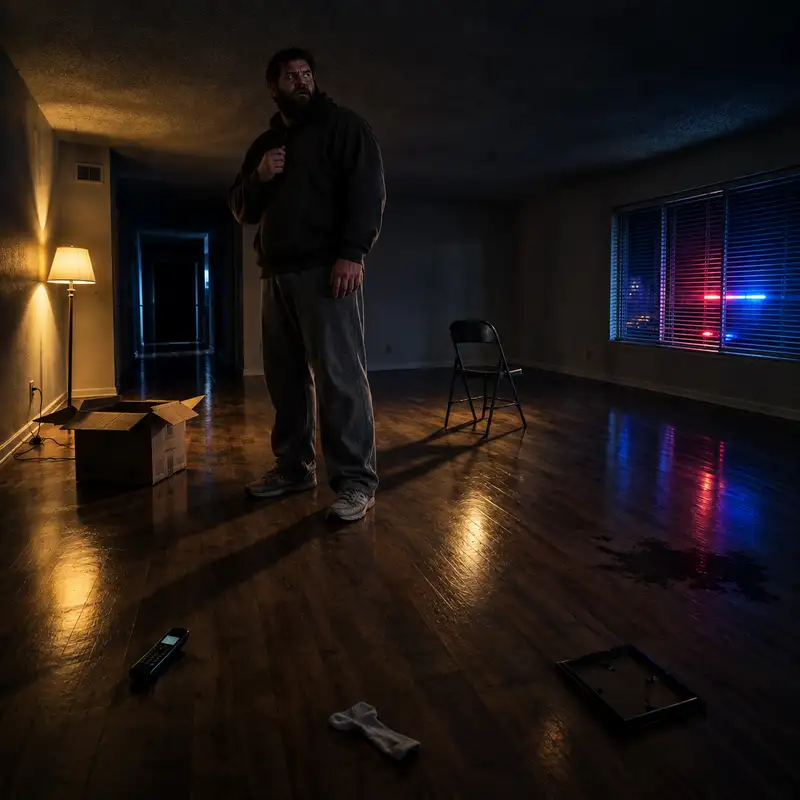
The afternoon becomes a radio-station reunion when Peaches arrives, and the show's carefully maintained illusion of professional broadcasting immediately begins to disintegrate. Viktor jokingly apologizes for various things he has apparently said about Peaches recently, while both men insist they are bitter enemies despite having recently watched a police reality show together at Viktor's house. Their viewing experience was allegedly most entertaining when several officers and a couple of suspiciously memorable individuals attempted to round up a pig in Arizona. The police pursuit of a porker somehow becomes the highlight of the program, demonstrating that the television industry's finest content may simply involve law enforcement attempting to negotiate with livestock. Peaches describes his apartment as so empty that his bathroom echoes through the hallway and into the living room, prompting Viktor to invent an entire imaginary crime-scene setup involving metal barrels, a Polaroid camera, a filthy mattress, suspicious VHS tapes, and a homemade human-skin disguise. The joke escalates until the apartment sounds less like a rental property and more like the location of a low-budget serial-killer documentary whose neighbors have been instructed not to ask questions. Peaches is potentially preparing to leave for another opportunity, but he is not ready to announce his plans, and Viktor jokingly threatens to sabotage his career with a terrible recommendation letter. The two also discuss Peaches' departure from Riverbend, the pain of potentially returning to a job he hated at In-N-Out, and the strange experience of having former acquaintances celebrate your professional setbacks online. They pretend to be enemies, discuss helping each other move, and imagine a future apartment tour so depressing that even the dust would need its own introduction. The pair also struggle to remember the correct microphone, mock one another's work habits, and discover that a room with almost no furniture can provide outstanding acoustics for screaming nonsense into the void.
As more coworkers join the conversation, the show turns its attention to radio-industry gossip and media personalities. Viktor and Peaches criticize Barrett Media for repeatedly posting about Rush Limbaugh, debate the legacy of controversial radio figures, and discuss a social-media account that mocks radio personalities so aggressively that its original account was reportedly suspended. The conversation touches on personal attacks, embarrassing online photos, the ethics of using artificial intelligence to manipulate images of real people, and the difference between publicly posting something and giving strangers permission to turn it into something else. They also discuss criticism aimed at Bill Burr and Jimmy Kimmel, celebrity hypocrisy, and the way entertainers can alienate audiences when their current actions appear inconsistent with their past public personas. Viktor argues that people often react to political keywords rather than listening to the actual point being made, using the reaction to his own media commentary as an example. He insists that people have misunderstood his criticisms of CNN, then shifts into a critique of the media's political framing and the tendency for audiences to label any opinion they dislike as belonging to the opposing political team. James Hetfield and Metallica also enter the conversation, with Viktor criticizing what he perceives as excessive caution from celebrities who would rather remain agreeable than speak plainly. Throughout the segment, Peaches and Viktor bounce between arguments about media, online outrage, workplace drama, and their own supposed feud, occasionally interrupting themselves to deliver jokes about who is secretly admired by listeners. Viktor claims that women simply approach him because of his extraordinary appeal, then immediately undercuts his own romantic mythology by joking that people become disappointed when they see him in person. The segment has all the structural integrity of three men discovering microphones for the first time and deciding that the best possible use of them is to insult the entire broadcasting industry.
The episode's domestic subplot is equally dignified. Peaches encounters the sprawling menagerie at Viktor's home, including several cats, a dog, and Jacob the gecko. The prospect of adding a bird to the household is rejected because birds are loud, messy, and potentially capable of adding a new layer of noise to an already busy animal residence. The cats' odor becomes a running joke, with everyone treating the smell of cat pee as both a domestic problem and an unavoidable law of nature. Viktor admits that the house smells like cat urine, while Peaches jokes that the living room rug might be hiding evidence of feline wrongdoing. In between the pet-related accusations, the men discuss Viktor's accumulated Halloween decorations, his reluctance to spend an entire weekend installing them only to remove them shortly afterward, and the possibility of purchasing a gigantic croquet mallet inspired by The Shining. Viktor imagines walking around with the enormous weapon-shaped sporting implement, while Peaches considers dressing like a football player and tackling people. Neither idea is exactly a model of responsible seasonal entertainment, but both fit perfectly into a Halloween conversation conducted by men who appear to have confused costume planning with a brainstorming session for a police report. The discussion eventually circles back to the possibility of Peaches moving, the challenges of figuring out a new job, the temptation to turn an empty apartment into a deliberately miserable home-tour video, and the certainty that friends will volunteer to help with the move primarily because the destination apparently contains gambling and strip clubs. The episode closes with the familiar mix of unfinished plans, workplace teasing, bizarre hypotheticals, and radio-station nonsense: Viktor still has tasks to complete, the career fair still awaits, the laundry remains undefeated, the household cats continue to dominate the living environment, and Peaches may be plotting his next move. The VW Show has once again demonstrated that a normal Wednesday can contain the complete collapse of retirement optimism, a grenade-filled estate sale, a philosophical argument about masks, a pig-related police incident, the death of corporate employee benefits, and a man considering a giant croquet mallet as a legitimate Halloween accessory. Somewhere in all of this, a perfectly good energy drink was opened, and it still wasn't enough.