Artist Interrogations: Carolina Roslyn - 10/19/2026
Carolina Roslyn has returned, and East Idaho's roads are apparently still operating under a traffic management philosophy best described as everyone has been given a driver's license, but nobody has been informed what the painted lines mean. Host Viktor Wilt welcomes Carolina back approximately a year and a half after her previous appearance, and the conversation immediately establishes two things: gas prices are irritating everyone who has to drive for a living, and Carolina's dash cam has become an unwilling documentary filmmaker assigned to chronicle the increasingly suspicious behavior of motorists throughout East Idaho. While Carolina was living in California, the roads apparently offered very little entertainment because everyone drove slowly and behaved themselves. She returned to Idaho, however, and suddenly the daily commute became a never-ending audition for a reality show in which the grand prize is several million internet views and the consolation prize is being the subject of a conversation between two radio personalities who cannot remember basic vocabulary. Carolina now regularly captures enough footage to overwhelm her editing schedule, which is an excellent problem to have if your business model depends on documenting other people's baffling decisions. If you have ever watched somebody perform a maneuver in traffic that made you question whether they were legally allowed to operate a shopping cart, Carolina might have the footage. If you have ever witnessed something so incomprehensible that your first instinct was to grab your phone instead of call for help, congratulations: you understand the creative tension at the heart of this interview.
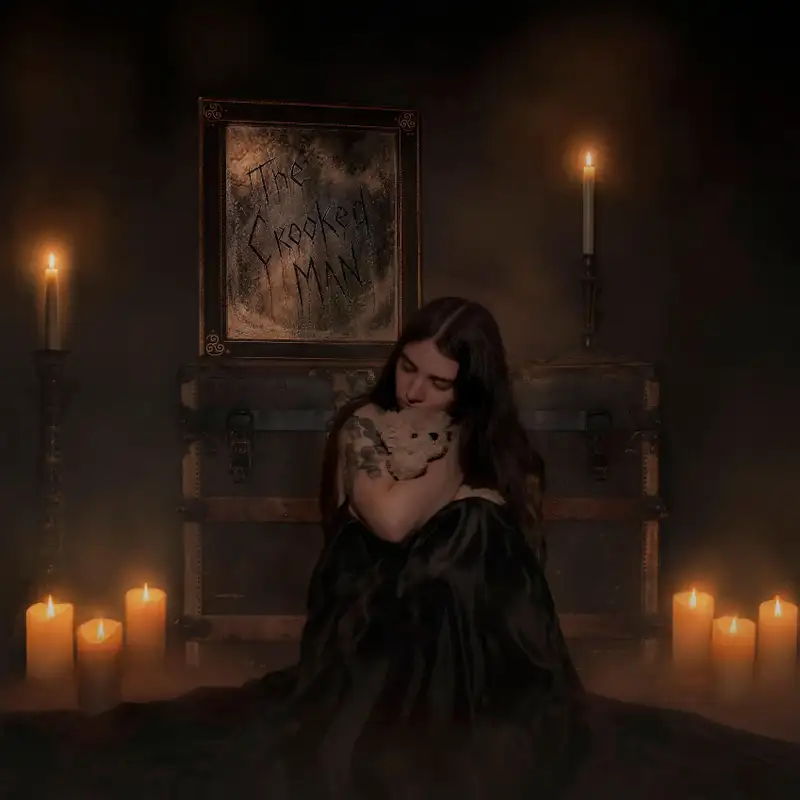
Naturally, the conversation revisits the viral video that helped launch Carolina into internet notoriety: the legendary fast-food incident involving a woman losing her mind at Dairy Queen. Viktor initially misidentifies the establishment as Arctic Circle, briefly creating a completely unnecessary fast-food identity crisis before correcting himself. The distinction matters because this was not simply a customer having a mildly unpleasant afternoon. This was the sort of public meltdown that escapes the boundaries of its original location and proceeds to accumulate millions of views across the internet, becoming a permanent contribution to the digital archive of humanity's inability to behave normally around ice cream. Carolina estimates that the video accumulated around a million views on her own YouTube channel, with the total reaching millions more as other people shared it. Before dash cams became a major part of her content, this was the video that introduced her to a much larger audience. Somewhere, the internet's enormous collection of public arguments, restaurant disputes, and people discovering that their actions have consequences gained another entry, and Carolina was the person standing nearby with the footage. The conversation then takes a turn toward a significantly more personal milestone, because Carolina has finally released new music after spending considerable time developing a song that she actually feels satisfied with. This is not merely another content upload between traffic videos. It is the culmination of a creative project that has been developing since the last time she appeared on the show, and the track is called “The Crooked Man.”
The origin story of “The Crooked Man” is particularly delightful because it involves a creative process that begins with an idea, travels through a phone, encounters a disappointing demo, and eventually retreats into a food closet in Idaho Falls to record vocals. Carolina explains that she originally developed the song herself, building the initial idea on her phone before asking someone to recreate it as a demo. Unfortunately, that version did not meet her expectations, particularly when it came to the quality of the vocals. Rather than accept a result she was unhappy with, she purchased a microphone, set up a recording arrangement inside her food closet, and recorded the vocals again on her own time. This is how the artistic process works now: you can have a microphone, an idea, a deeply personal subject, and a small enclosed space containing your food supplies, and somehow the beginning of a finished song emerges from the arrangement. The food closet was not simply a storage area anymore. It was a private recording sanctuary, a vocal laboratory, and an extremely unconventional branch of the Idaho Falls music scene. Carolina says she prefers recording without pressure, allowing herself to work at her own pace rather than forcing a performance under studio conditions. Viktor relates to this, explaining how uncomfortable it can be to hear dry, unprocessed vocals during recording, especially when the material involves metal screams that sound very different before mixing and production. Eventually, Carolina worked with Jovi at Garden Studios to reconstruct the song into its finished production. What began as an idea on a phone, passed through a demo that disappointed her, and received a second life in a food closet ultimately became a released single. Somewhere between the microphone and the pantry shelves, an independent artist found the version of her song she had actually wanted to make.
But “The Crooked Man” is not a novelty track about crooked furniture, a suspicious landlord, or a man who has been standing at an increasingly concerning angle for several decades. The song has a much more personal origin. Carolina explains that it was inspired by experiences from her childhood, things she wants to express through music so she can begin letting go of the past. Her upcoming album, which she hopes to release sometime in 2027, will continue exploring similar subjects: personal experiences, memories that remain emotionally significant, and things she no longer wants to carry with her indefinitely. The music is a way of taking material that has weighed on her and turning it into something she can release into the world instead of keeping it locked away. The title itself draws inspiration from the traditional Crooked Man poem, as well as The Conjuring 2, which features its own frightening interpretation of the character. Someone even messaged Carolina to ask whether the song had been inspired by Dungeons & Dragons, demonstrating that a creepy title can apparently activate an entire network of supernatural, fantasy, and tabletop associations in the human brain. Carolina clarifies that those were not the primary inspirations. The actual recipe involved a nursery-rhyme figure, a horror movie, personal history, electronic production, and a cello. This combination creates a song with an unsettling atmosphere that Viktor describes as resembling the experience of wandering through an old video game, perhaps inside a creepy museum where every hallway appears to have been designed by someone who strongly dislikes the concept of a comfortable evening. The track has an eerie, music-box-like quality that fits naturally into Halloween programming, even if its underlying emotional meaning is considerably more personal than a seasonal spooky playlist might suggest.
And then there is the cello, because apparently the food closet was not going to be the strangest item in the production credits. Carolina explains that much of the instrumentation is electronic, but a real cellist performs on the majority of the song. She found Ukrainian cellist Paulina Faustova through Fiverr, hired her to contribute to the track, and was pleased with the result. The cello adds another layer to the song's atmosphere, giving the production a more organic and cinematic dimension alongside the electronic elements. Carolina has also used Faustova on another song that is already finished but has not yet been released, with the intention of including it alongside the rest of her upcoming album. This is an excellent demonstration of how independent music production can operate: one person develops an idea on a phone, another person helps create a demo, a microphone is installed in a food closet, a local studio helps finish the production, and a cellist in Ukraine contributes to the final result after being discovered through an online freelance platform. Geography has become almost irrelevant. The recording studio can be in Idaho Falls, the musician can be in Ukraine, the production can be assembled electronically, and the finished song can appear on Spotify and Apple Music for listeners anywhere. Carolina is also learning to trust her own process, taking the time necessary to make the music sound the way she wants rather than releasing material simply because it exists. Her previous songs, released a few years ago, did not leave her fully satisfied, so “The Crooked Man” represents a fresh attempt to create something that better reflects her intentions. The next album remains scheduled for sometime in 2027, although the precise release date has not been determined.
Naturally, no conversation with Carolina Roslyn would be complete without discussing horror movies, because a person who writes a creepy song inspired by The Conjuring 2 and the Crooked Man poem is almost legally required to have opinions about things lurking in abandoned buildings. Unfortunately, Carolina is not especially impressed with much of the modern horror she has watched. She admits that some recent movies have felt corny, and she is particularly enthusiastic about forgetting the existence of Jeepers Creepers Reborn. Viktor brings up Carolina's recreation of a Jeepers Creepers chase scene using an old Chevrolet truck, the kind of vehicle that looks as though it could appear in a rural nightmare without needing any special effects. Carolina identifies the original truck as a 1942 Chevy, although she initially refers to it as being around a 1941 model. The important distinction is that the vehicle successfully helped recreate a recognizable horror sequence, while the later film apparently failed to make a similarly lasting impression on her. Viktor then starts assembling a preliminary horror recommendation list, bringing up Obsession, Backrooms, a new Resident Evil movie, the Friday the 13th prequel series Crystal Lake, and the Carrie reboot. The discussion wanders through old-school horror, modern remakes, and the particular charm of productions that embrace some of the wonderfully ridiculous qualities of 1980s horror cinema. Viktor even points out a Carrie detail involving the fictional SMART store, which reminds him of the Evil Dead series and its famous Shop Smart reference. Carolina asks for recommendations, and Viktor agrees to send her a list of films worth checking out. Thus, in addition to recording songs in a food closet and collecting footage of motorists who appear to have misunderstood the entire concept of intersections, Carolina now has homework: watch a collection of horror movies selected by a radio host who has apparently decided that her creative development requires further exposure to fictional murderers, supernatural entities, and increasingly questionable cinematic decisions.
The conversation eventually returns to Carolina's dash cam career, where the roads of East Idaho continue to provide an endless supply of inexplicable human behavior. One of her more recent viral clips involved a police officer pulling someone over in the middle of an intersection. Carolina says that viewers were confused about why the stop happened where it did, because the officer cut through the intersection and pursued another driver while traffic was turning around them. That video also attracted millions of views. The problem with this line of work, however, is that genuinely bizarre incidents cannot be summoned on command. Carolina explains that when she deliberately drives around looking for strange things to record, nothing happens. The moment she decides to go searching for unusual footage, the roads apparently become perfectly normal, leaving her to waste gas while every driver behaves like they have recently completed an advanced defensive-driving course. Viktor offers some potential locations for future expeditions, including Rexburg and Pocatello, suggesting that certain areas might provide better opportunities for witnessing bizarre roadside behavior. He also describes an incident at the Rollandet and Sunnyside intersection, where an older man stood in the middle of active traffic while vehicles passed him in both directions. The man appeared to be looking around before eventually bending down to pick something up, leaving Viktor wondering whether he should call 911 or start recording. Unfortunately, the man moved out of the road just as Viktor was preparing to capture the moment on his phone. The footage escaped him. The internet received nothing. The potential viral clip died before it could be uploaded. It was a missed opportunity for social media monetization, a failure of timing, and a reminder that the most bewildering things happen when your recording equipment is unavailable or your attention is divided. Carolina understands the frustration: she needs more footage that is genuinely baffling to witness, but the universe refuses to schedule its strangest moments around her content calendar.
The interview closes with Carolina explaining that she recently moved into an apartment and expects to remain in East Idaho for at least another year. She has not been posting as frequently lately, but she hopes to continue making music and collecting dash cam footage when the roads provide something worth sharing. Viktor encourages listeners to find her on social media under Carolina Roslyn, spelled with a C and an S, and to stream “The Crooked Man” on Spotify, Apple Music, and other music platforms. He also encourages people to support the new single, follow her online, and look forward to the music she plans to release with her upcoming album. The episode ends with Carolina Roslyn emerging as an independent artist whose creative life spans several completely different worlds: viral videos of public meltdowns, the daily absurdity of East Idaho traffic, horror cinema, electronic music production, personal songwriting, and international collaborations with musicians found online. One minute, Carolina is explaining how a childhood experience became an eerie song about letting go of the past; the next, she is discussing a police officer pursuing a driver through an intersection while the internet collectively tries to understand what happened. Somewhere in the middle of all this, a microphone sits in a food closet, a cellist in Ukraine contributes to an electronic horror-pop production, a forgotten Jeepers Creepers sequel is permanently banished from memory, and an older man standing in traffic narrowly escapes becoming the next viral sensation. The Crooked Man has officially arrived, the next album is on the horizon, and East Idaho's drivers have apparently been given another year to decide whether they intend to operate their vehicles according to established traffic laws or continue providing Carolina Roslyn with the raw material for her next million-view video.