#0422 - This Little Piggy Built His House Out Of Fecal Sludge Biochar - 09/11/2026
Friday arrives on the Viktor Wilt Show with Viktor already buried under approximately one billion projects, desperately hoping for a weekend where nobody forces him to wake up early, and immediately discovering that the internet has decided to dump an entire landfill of nonsense directly into his brain. The morning begins with the promise of Traffic School with Lieutenant Crane, a pile of station work that needs finishing, and Viktor's determination to crush the workday before escaping home for what he hopes will be a relaxing weekend of chores, family obligations, lawn maintenance, and attempting to recover from the general condition of being alive. Then politics barges through the door wearing a giant novelty check. Viktor reacts to the newly reported proposal discussed at the Republican midterm convention in Dallas: a $5,000 payment to American adults if Republicans retain control of Congress. The idea immediately sends him down the mental highway of previous promised government money, tariff refunds, DOGE checks, and the general question of whether anybody should emotionally budget money that has not actually appeared in their mailbox. Viktor's position is essentially: if the government sends him five thousand dollars, fantastic, he will happily admit he was wrong, but until the check actually exists, he isn't building his financial future around it. Naturally, this turns into the greatest radio promotion nobody has ever funded: give away all the money the government promised people but never gave them. Five grand? Sorry, no. Viktor has Theory of a Deadman and Sevendust meet-and-greets to give away, and apparently that is the only government-adjacent promise he can personally guarantee.
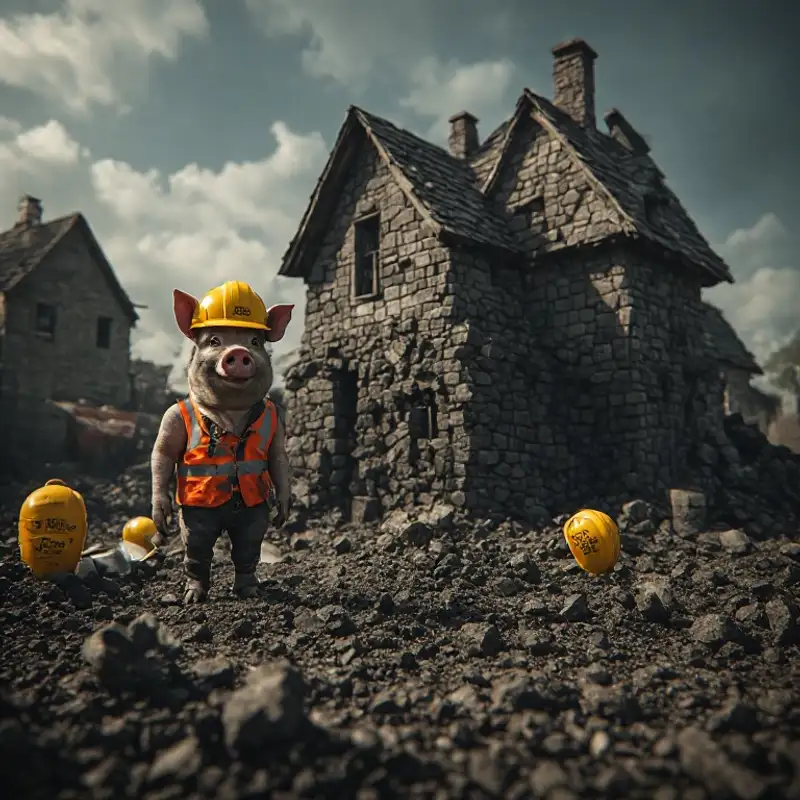
Then the program takes a hard left directly into the sewer because Stuart sends Viktor a story about scientists turning human waste into concrete. After verifying that the story was not merely Facebook-generated sewage fan fiction, Viktor discovers the existence of fecal sludge biochar and becomes immediately obsessed with the possibility of constructing the first poop-powered driveway in East Idaho. The discussion escalates from stronger concrete to houses with foundations made from treated human waste to the possibility of putting “Fecal Sludge Biochar” on a billboard like it is the hottest new luxury construction product. Viktor pitches the slogan, the business model, the metal-band name, and possibly the entire future of East Idaho infrastructure before wondering whether Lieutenant Crane, who apparently does concrete work on the side, is already secretly pouring the world's strongest poop driveway. It is the sort of conversation that begins with legitimate materials science and ends with Viktor desperately trying to make “Fecal Sludge Biochar” sound like something that belongs on a festival lineup.
From there, the show falls into the internet's latest conspiracy rabbit hole: the claim that the Hawk Tuah Girl, Haliey Welch, secretly reinvented herself as country superstar Ella Langley. The evidence presented by the internet consists primarily of side-by-side photographs, facial-feature comparisons, suspiciously examined neck moles, hair theories, and the extremely scientific observation that nobody has apparently seen both women in the same place at the same time. Viktor examines the evidence, points out that the teeth don't appear to match, acknowledges that the theory makes very little sense, and then essentially decides that he would rather have this kind of ridiculous celebrity conspiracy flooding his feed than another twelve hours of political arguments. The result is one of the most magnificently stupid conspiracy theories imaginable: viral internet personality disappears from the public eye, country singer becomes enormous, therefore they must be the same person. Case closed. Probably. Maybe. Someone check the moles.
The show then turns unexpectedly personal when Viktor starts thinking about the smartest person from his high school graduating class. This leads to a trip through academic underachievement, teenage stupidity, failing government class because he simply refused to do the homework, and then returning to summer school and absolutely annihilating the class with a 100 percent score. The teacher apparently could not understand why someone capable of acing the material was sitting in summer school in the first place, and Viktor's answer was essentially that he had a bad attitude and couldn't be bothered to turn in his work. The discussion spirals into the strange fate of exceptionally intelligent people, people who were expected to end up at NASA or CERN but instead built bizarrely specific internet empires, and the uncomfortable possibility that the smartest person from your high school might now be retired in Spain while you are sitting around reading Facebook posts about poop concrete. Viktor ultimately decides he would rather read about failures than incredibly successful former classmates because there is only so much evidence of other people's success a person needs to absorb before they start questioning their own life choices. At 44, however, Viktor declares himself young enough to still accomplish things, invokes Rodney Dangerfield as evidence that people can find success later in life, and briefly considers the possibility that the second act has not necessarily been cancelled.
Freak News arrives almost entirely from San Francisco, which apparently decided to provide enough material for an entire separate podcast. First comes the question of why portions of the city smelled like trash, followed by Viktor's immediate suspicion that perhaps large cities simply smell terrible when the weather gets hot. Then things become considerably more cursed when the show discusses a San Francisco home where a tenant was allegedly killed by a landlord, yet the property was reportedly being offered for $6,300 a month while the legal situation played out. Viktor considers the obvious question: who looks at a rental listing, reads “someone was allegedly murdered here,” sees the $6,300 price tag, and says, “You know what? I'll take it.” The San Francisco nightmare continues with a man allegedly attempting to punch a dog walker at a beach, only to discover that his intended victim was a former Marine and martial arts instructor. The attacker gets restrained until police arrive, leading Viktor into an extended public-service announcement about why randomly starting fights is an absolutely terrible idea. You have no idea who the person standing in front of you is, what they have been trained to do, or whether the apparently harmless little guy you're about to punch has spent his entire life learning how to put people on the ground. The show ends the segment with the surprisingly serious reminder that fights can go catastrophically wrong in seconds, and nobody wins when a stupid confrontation ends with someone dead, seriously injured, or in jail.
Once Peaches joins the show, the conversation turns toward the glorious technical nightmare of radio station computers, remote desktops, missing songs, stations mysteriously appearing to be on the air despite computer systems behaving as though everything is broken, and the eternal question of which little box in the control room actually needs to be turned on. Then, somehow, the conversation becomes about someone squirting From Ashes to New with a water gun at a concert, how anyone sneaks a squirt gun into a venue, whether the water inside could secretly be something much worse than water, and the TSA apparently giving Peaches the full treatment because he tried to transport a candle. From there comes the horrifying realization that people have allegedly hollowed out candles to hide drugs, which makes a completely innocent candle suddenly seem like the most suspicious object in an airport.
Travel becomes its own financial horror story when Viktor talks about trying to get an affordable flight to his daughter's wedding in Phoenix. Airfare is expensive, every airline wants additional money for every possible human function, extra luggage becomes an economic event, and Viktor starts calculating how many personal belongings his children will need to sell after he dies in order to collect their inheritance. The wedding itself may be relatively small, but Viktor still manages to compare it to destination weddings in Venice and ultimately reaches the philosophical conclusion that children are expensive, weddings are expensive, and the courthouse remains an extremely underrated venue. There is also a brief detour into life insurance, inheritance, wealthy parents who refuse to leave their children money, and Viktor's own determination to help his kids despite being a paycheck-to-paycheck guy with credit-card debt. Somehow, the entire thing becomes a parenting seminar conducted by a man who would like his children to know that they will inherit plenty of stuff, but preferably not his financial problems.
Then comes the scientific breakthrough nobody asked for: apparently women have identified hobbies that make men more attractive. Reading books tops the list, which Viktor immediately recognizes as both convenient and potentially exploitable. You don't necessarily have to read the books, he suggests; you could theoretically buy a bunch of them at a thrift store and place them on a shelf to create the visual impression of literacy. Learning a foreign language, playing an instrument, cooking, woodworking, painting, writing, photography, astronomy, hiking, blacksmithing, and archery also enter the discussion. Viktor is particularly skeptical about blacksmithing as a romantic hobby, imagining the supposed seduction of a man repeatedly hammering metal in his garage while his partner wonders why the house sounds like a medieval weapons factory. Archery is similarly questioned because shooting a fake turkey with a bow in the backyard may be less romantic than simply mowing the lawn. The segment eventually becomes a full field guide for dudes attempting to become attractive through hobbies, with Viktor recommending reading, guitar, cooking, and actually learning how to do useful things rather than merely purchasing props for an imaginary personality.
The grocery store becomes the next unlikely entertainment venue when Viktor discovers that Rainbow Grocery in San Francisco has been hosting local bands in its produce section. Naturally, this leads to a critique of a band called Now, an investigation into whether bands should Google their names before releasing music, and a proposal to turn East Idaho grocery stores into live-music venues. Viktor imagines Albertsons, WinCo, and Walmart hosting bands between the tomatoes and frozen pizzas, although he immediately realizes that a full-volume metal band would probably be removed from the premises approximately twelve seconds after the first kick drum. The discussion also exposes the depressing economics of local music: musicians are frequently asked to play for “exposure,” sell tickets, or otherwise work for almost nothing. Viktor argues that even a modest guaranteed payment could make a meaningful difference to local bands. Naturally, he also insists that if he were performing in a grocery store, he would want JD running sound so the guitars, bass, and drums could reach the appropriate level of crushing heaviness before someone from management arrives to shut down the produce mosh pit.
The final stretch of the show gets darker as Viktor and Peaches discuss a bizarre airplane incident in which a passenger claimed he was nearly sucked out of a window, while the airline disputed the description and characterized the incident differently. That launches an extended discussion about turbulence, airplane crashes, emergency exits, Travis Barker's history of surviving a plane crash, traveling by boat instead of flying, and the uncomfortable realization that the ocean might actually be more terrifying than the sky. Peaches recounts paying for extra legroom only to discover that extra legroom comes with the responsibility of actually paying attention during the emergency-exit briefing. A teenager apparently starts mimicking the emergency-exit procedure right before takeoff, causing Viktor to contemplate the possibility of personally becoming the airplane's least qualified security officer. The conversation wanders through movie physics, explosions that send characters flying but somehow leave them perfectly capable of running away, and the general unreliability of Hollywood when it comes to depicting physical trauma.
And then the date catches up with the show. September 11, 2026 marks 25 years since the September 11 attacks, and what had been an absurd Friday morning suddenly becomes reflective. Viktor talks about being at work in a hotel at the time, watching the news on television while cleaning rooms because smartphones and modern streaming distractions did not exist yet, and remembering the moment the second plane hit and the realization that this was not an accident. Peaches was only five years old and remembers little of the day itself. The conversation avoids trying to manufacture some elaborate radio angle out of an event that speaks for itself. Instead, Viktor focuses on remembering the victims and on what he remembers about the period afterward: a country that, for a brief time, seemed considerably more united and more willing to help neighbors and people with whom they disagreed. His closing thought is less about politics or historical analysis and more about wishing people could eventually return to treating one another with basic decency. After a morning that contained $5,000 political checks, poop concrete, secret country-music identities, murder-house real estate, grocery-store concerts, airplane windows, and TSA candle interrogations, the show ends on a surprisingly human note: remember the people who died, recognize how much has changed, and hope people can figure out how to get along again.